It’s National Nurses Month, a time to recognize the skill and dedication of our nurses.Each week of National Nurses Month has its own theme, and this week focuses on recognition and innovation.
It’s an appropriate time to acknowledge the daily challenges that nurses face and to consider how to make their day-to-day lives easier.
Surgical item documentation is an essential duty for perioperative nurses; however, it can be a time-consuming and frustrating task that takes nurses away from direct patient care. But, as health-tech innovation escalates, all that could be about to change.
Why is surgical documentation important?
Accurate documentation of the products used in surgery is not just about patients, it can have a significant impact on healthcare business performance. Healthcare organizations rely on accurate point of use documentation to track inventory, manage costs, and maintain compliance with regulatory requirements.
Let’s look at these in turn.
Inventory management
Full and accurate point-of-use documentation of the reportable items used in surgery informs the materials management team, helping them to identify usage trends and adjust their inventory levels accordingly. This leads to a reduction of surplus stock and minimizes waste.
The role of POC documentation in revenue cycle management
Inaccurate or incomplete reimbursement documentation can result in delays and denials.
Achieving a true record of all the billable items used in surgery ensures accurate medical billing and optimizes revenue cycle management. Once billing is based on full and accurate item and charge capture, the case revenue will naturally rise.
Why accurate recording of usage supports regulatory compliance
Accurate point-of-use documentation supports improved regulatory compliance, for example Unique Device Identification (UDI). These regulations are designed to support improved patient safety and end-to-end medical device tracking. Accurate documentation can help organizations demonstrate UDI compliance and avoid penalties or legal issues.
Why recording the items used in surgery is a patient safety issue
Accurate, digital, surgical documentation has a direct impact on patient safety. By tracking the use of medical devices and implants used in surgery, organizations can protect patients. If there is a future medical product recall, the healthcare organization can track and trace all patients that consumed the item.
Why is surgical documentation difficult for nurses?
We often run educational sessions for nurses and listen to their feedback about surgical documentation. There is a lot of frustration among front line nurses who are struggling to manage with out-of-date systems.
There are a variety of methods used by nurses to document utilization. Manual recording is still used but is known to be time-consuming and inaccurate. If a product recall should occur, dealing with it using manual records is imprecise and ineffective.
Many healthcare providers use barcode scanners at the point of care. However, this can be frustrating, as nurses have to scan multiple barcodes on item packaging to identify the specific label that contains the information needed. Even when the correct code is scanned, the system may not recognize the code – maybe it’s a substitute product or perhaps the Item Master listing is out of date.
Even if an item does successfully scan, the data retrieved may have gaps, for example the batch number or expiry date is often missing.
Achieving full and accurate utilization data at the point of care is time-consuming and tricky and can involve the keying-in of additional data, often after surgery.
In addition, there will be a pile of packaging that was not successfully scanned into the system to deal with later.
Summary of drivers to achieve accurate point of use use documentation
| Management issue | Impact of inaccurate surgical documentation |
| Inventory Management | · Unclear picture of inventory.
· Surplus stock · High expiry rates · Inaccurate procurement · Inflated costs |
| Revenue Cycle Management | · Inaccurate item and charge capture
· Inaccurate reimbursement documentation · Post surgery audits try to pick up on errors. · Delays and denials · Under reimbursement |
| Regulatory Compliance (UDI tracking) | · Inability to track medical devices and implants
· Lack of connection between patients and products after consumption · Ineffective recall management systems and processes · Heightened patient risk |
| Patient Safety | · Poor UDI tracking raises risk to patients in the case of a product recall
· ‘Never events’: poor expiry management risks accidental usage. · Nurses distracted by documentation give less attention to patient care. |
| Perioperative Nurse Workload | · Nurses struggle with item and charge capture using existing systems
· Surgical documentation is often completed after the procedure. · Difficult to record items can end up unrecorded. · Nurses are torn between documentation and focusing on patients |
Image recognition and AI technology are changing surgical documentation
New computer vision technology is now minimizing the time and effort required by nurses to record product usage data at the point of care.
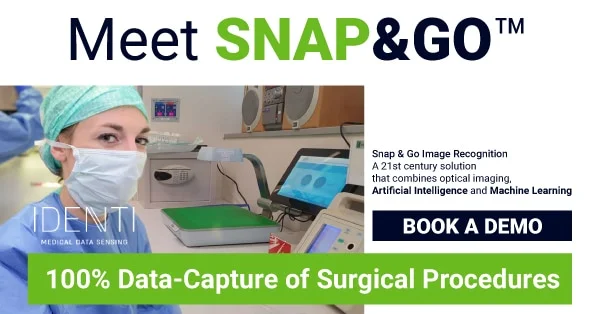
Snap & Go is a game-changing point of use documentation tool that takes a quick ‘snap’ of the product packaging.
Once the product details are captured, AI and machine learning automate the identification of the item,
as well as the recording of it on the patient file.
The nurse’s role is reduced down to just 3 seconds per item!
AI cloud technology ensures that surgical data becomes meaningful business data that drives through efficiencies.
Snap & Go is one of IDENTI’ advanced, user-friendly data-sensing tools – all managed in one cloud platform.
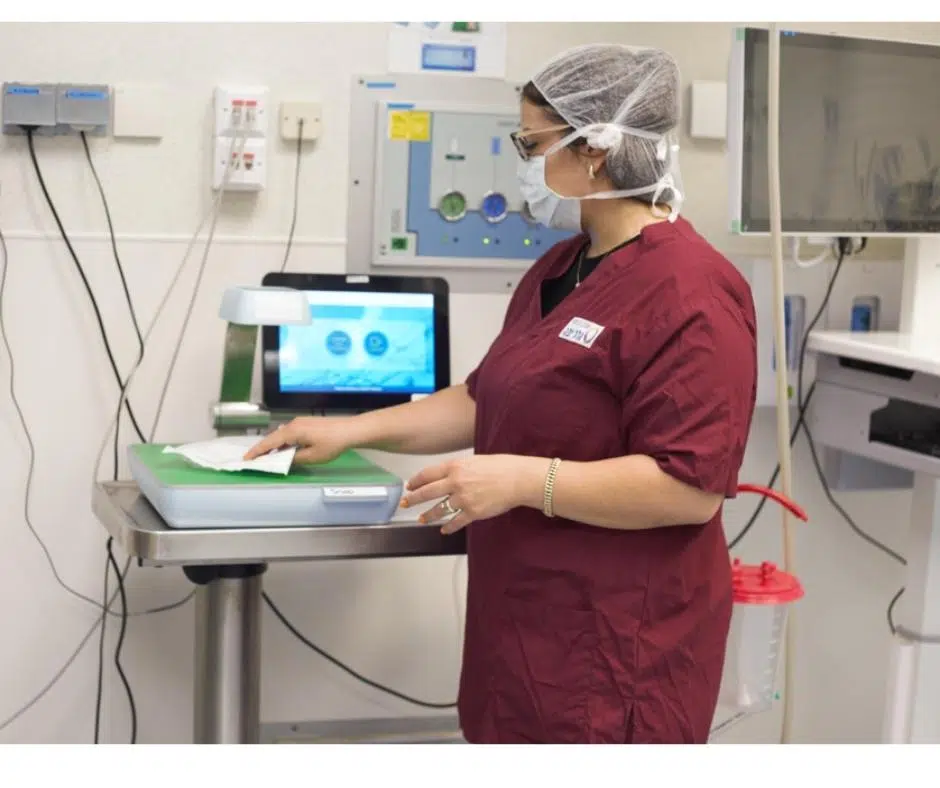
Taking the pressure of nurses at the point of care
Accurate documentation has an organizational impact. It can reduce costs, improve revenue cycle management, maintain compliance with regulatory requirements, and improve patient outcomes.
As healthcare becomes more complex and cost pressures continue to mount, accurate documentation will only become more important for healthcare organizations looking to remain competitive and provide high-quality care.
Supporting nurses with the most effective tools will not only ensure accurate documentation,
it will also allow them to spend far more time focusing on the patient care.
During American Nurses Association, National Nurses Month, we encourage healthcare organizations to lighten the load on nurses by introducing new technology into a vital workflow.
Snap & Go is changing the way that medical devices, implants, and chargeable consumable are documented at the point-of-care, as well as ensuring that clinical data supports operational and financial optimization.
Hear nurses’ feedback on Snap & Go.
If you want to support your nurses by providing an easy way to document usage in surgery, find out more about Snap & Go.
IDENTI is helping health systems, hospitals and ambulatory care providers to transform the future of healthcare by creating medical data sensing tools that solve current challenges and lighten the load on staff. All of our interoperable solutions are easy to implement.