
The rules of the game have changed. Healthcare inventory management is evolving, and new technology is transforming slow, inefficient systems into smart, digital solutions. The choices that you make today will keep you at the front of the pack or see you falling behind.
Top Three Healthcare Inventory Management Challenges
Let’s start by looking at some of the persistent problems faced managing medical inventory in hospitals and surgery centers.
Here’s our top three challenges that customers frequently complain about.
1. Lack of inventory visibility
Ever feel that your inventory is always a step ahead of you, and that you’re forever playing catch-up? Just ensuring you have basic inventory information can be hard. For every SKU you need to have answers to the basic questions: Where is it stored? How much do you have? How much do you need?
Without clear vision you risk ill-informed procurement that results in shortages, stockouts and surpluses.
2. Poor inventory control
Struggling to keep track of your stock? Tasks like expiry management can become a constant battle but are vital in order to operate efficiently.
If you don’t control your stock, your stock controls you, resulting in high wastage, high costs and high risk.
3. Unreliable supply utilization data at the point of use
Are you basing procurement decisions on inaccurate consumption data? Without real insight into your operating rooms (OR) and procedural rooms, you lack the vital data you need to proactively manage your stock.
Lack of insight into surgical areas means risks you running short when you need it most and prevents you having the final piece of the jigsaw for meaningful supply data.
At IDENTI we hear about the same challenges from providers, wherever the healthcare facility is based in the world, and whether it’s a small rural provider or a large healthcare system.
Medical Inventory Systems Used to Manage Different Types of Stock
Not all inventory is equal. Hospitals will have a range of inventory from bulk medical supplies to high value implants. There is a difference to how these are managed, and the technology required.
Medical supplies
Medical supplies are stored in nursing units as well as in operating rooms and procedural areas. It is commonly managed using a Kanban&PAR system which is designed to monitor inventory and ensure timely restocks.
Medical devices, tissue, implants
This specialist inventory is stored in surgical areas and can be a mix of owned stock or consignment. Some providers still manually manage this stock whereas others have moved to an RFID smart cabinet system or mobile scanners. One area that proves to be problematic for many is tracking this inventory once it enters the operating room.
Narcotics, controlled drugs and medications
Pharmaceutical inventory can be stored in the surgical setting, as well as in the Pharmacy Department. Locked cabinets used to be common but increasingly automated dispensing cabinets are used to manage this stock digitally.
New Technology Advancements in Healthcare Inventory Management
The new way of managing medical inventory is to streamline workflows and reduce labor while optimizing data capture. To do this, the latest healthcare technology is required.
The combination of smarter data collection devices plus advanced AI software is transforming supply chain data into the business intelligence that drives through smarter healthcare management.
So, let’s take a look at the must-have features automated inventory management systems.
Medical Supply Management System
The management of bulk supplies can involve inefficient counts or rely on a high degree of nurse compliance. Despite improvements in two bin Kanban and PAR-level systems, many providers still struggle with unreliable data and supply chain inefficiencies.
For PAR systems the emergence of weight-based technology has added precision into data collection, but the sheer size of the units or bars can make them unsuitable for smaller supply spaces.
The newest technological development in PAR supply management is the emergence of the Wireless Weight-Based Bin that is an individual smart bin with a digital label. This breakthrough technology finally provides a fully flexible option that seamlessly fits into your existing storeroom set up, while providing fully autonomous restocks in the form of perpetual stock-level checks and self-replenishment once the order point is reached.
For Kanban systems, there’s another neat solution. Digital tags that can be attached to your existing inventory bins, racks, shelves or drawers, for instant automation. The Restock Tag just requires one click of the restock button to generate new supplies.
Automated Kanban and PAR solutions are the future of medical supply management and new, easily integrated technology is providing the simplest way to upgrade. These systems significantly reduce nurse involvement in supply chain activity and reduce the time spent by materials management too.
The data generated by this automated Kanban & PAR system helps to set optimum PAR levels and ensure procurement is demand-driven and arrives on time.

Medical Device, Tissue and Implant Management System
This expensive inventory needs item level management, with many items coming under FDA regulations that require UDI management. This involves ensuring full UDI data, including batch number, lot and expiry date, is stored in the system. RFID cabinets are able to ensure perpetual implant tracking for all items in stock and are a great solution for managing this specialist inventory.
The TotalSense RFID Smart Cabinet provides continuous stock monitoring and has additional RFID sensors compared to other cabinets on the market. This means that nurses aren’t required to carefully place products in a standard formation. It embraces the rushed, real-world surgical setting, where nurses don’t have time for unnecessary compliance restrictions.
The cabinet ensures end-to-end implant tracking and can also be utilized by supply chain partners, making it an ideal solution for consignment management, so that all parties share real-time data insights.
Metrics, reports and data analytics ensure automated expiry management, full inventory visibility and valuable business intelligence for smarter decision making that reduces costs and waste.
Point of Use Supply Documentation Solution
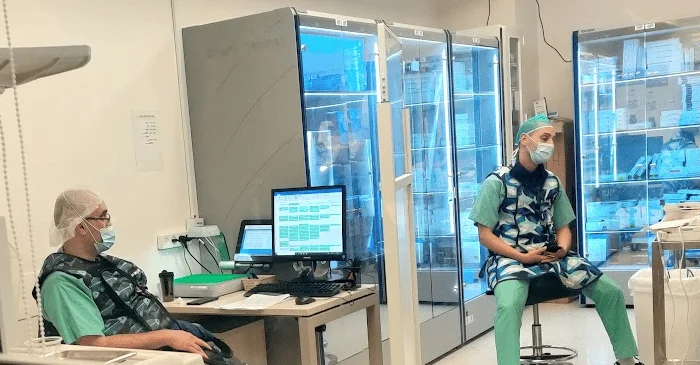
Providers wishing to shine some light on those dark data spaces in the OR and procedure areas can add a final safety net to their implant management by using a custom-designed perioperative documentation tool that ensures full item and charge capture at the point of use.
Snap&Go automatically documents utilization, ensuring full UDI capture, as well as efficient charge capture. The revolutionary use of image recognition technology reduces the task of nurses down to 3 seconds and the system automatically identifies, verifies and documents each product into the EHR.
Finally, providers can fix their toughest data gap and ensure full consumption data will result in compliant medical records, demand-driven procurement and accurate medical billing.
Automated Dispensing System for Narcotics, Controlled drugs and Medications
Decentralized dispensing brings the pharmacy into the operating room and can be of great benefit to patient care. However, ensuring that the automated cabinet is both secure and carefully managed are important criteria to check when deciding upon a new system.
IDENTI’s Automated Dispensing Cabinet has the highest levels of security. It’s single cell dispensing ensures that no user has access to anything that the right drug in the right dosage. With user-tracking, as well as item-tracking this smart dispensing cabinet ensures every user is fully accountable for their dispensing. Fully compliant with the requirements of the American Society of Health-System Pharmacists (ASHP) guidelines for preventing drugs diversion, this cabinet is a smart, secure option for decentralized dispensing.
The cabinet has a dual dashboard powered by AI software, that supports pharmacy management as well as clinician dispensing. The system ensures that the pharmacy has complete oversight and management of this pharmacy inventory, while the clinician has full access to dispense the medication, drugs or narcotics that are required to treat the patient.
New Dawn of Digital Healthcare Inventory Management
We are now standing at the crossroads between the old processes and new technology.
AI, image recognition and other digital advancements are changing the game, providing exceptional data capture capabilities, twinned with next-level data processing.
If your inventory management systems are struggling to cope with your need for real-time visibility and tracking, as well as prompt, accurate data, it’s time to leverage the power of new technology.
Lay the supply chain foundations for the healthcare of tomorrow.
Find out about new healthcare inventory management solutions that are transforming supply chain management and enhancing healthcare delivery.