

When most people think of medical waste, they probably picture the red bin in hospitals filled with used needles, gloves, and dressings. But there’s another less visible source of waste: sterile surgical supplies that are prepared or opened for a procedure but ultimately go unused.
This waste can be difficult to see at an organizational level. Individual items disappear into the clinical workflow, but their cumulative financial impact can be substantial. Researchers at UCSF, for example, estimated that wasted supplies cost their neurosurgery department alone $2.9 million annually.
Medical waste reduction requires that hospitals have reliable data showing what is routinely consumed, where utilization varies, and how supply preparation compares with actual procedural demand. This allows hospitals to make decisions based on actual utilization and not on preference cards, purchasing records, or retrospective documentation alone.
That is where technologies such as computer vision can help.
What is the Role of Computer Vision in Medical Waste Reduction?
Computer vision uses machine learning and image recognition to extract information from medical product packaging.
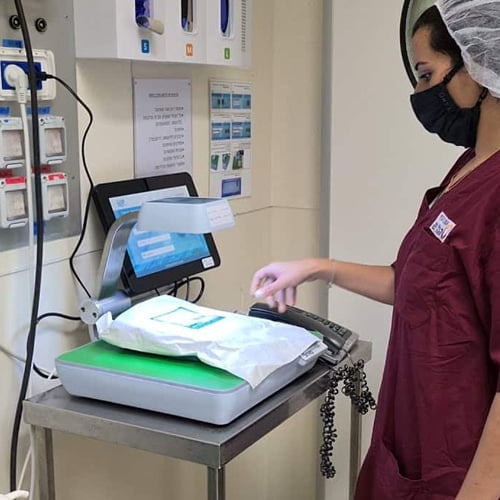
At the point of use, this technology can replace conventional barcode scanning and manual data entry with a faster image-based workflow. IDENTI’s Snap&Go point-of-use solution uses computer vision to identify the product and capture all relevant product information for clinical, inventory, and billing workflows. That includes the manufacturer, catalog number, lot or serial number, expiration date, and other UDI data available on the packaging. The result is a more complete digital record of the supplies associated with each procedure.
Snap&Go uses a dedicated point-of-use camera and image-recognition software to capture information from the product packaging already present in the clinical workflow.
Computer vision helps close a critical documentation gap by making accurate supply capture easier at the point of use. Once that data is available, hospitals can analyze supply utilization across procedures and identify opportunities to reduce variation, improve preparation, and control costs.
How Computer Vision Improves Point-of-Use Documentation
We’ve seen the evolution of surgical supply tracking. Traditional point-of-use documentation methods, such as barcode scanning and manual data entry, depend on staff completing each capture step correctly. Damaged barcodes, multiple codes on the same package, and products that are not recognized by hospital systems can all interrupt the workflow.
With computer vision, hospitals can streamline documentation, minimize errors, and support medical waste reduction.
Smarter Inventory Management for Medical Waste Reduction
At its core, medical waste reduction is about improving inventory management. When hospitals have a more accurate record of what is used in each procedure, they can:
- Compare supply utilization across similar procedures
- Identify unexplained variation between cases
- Review whether preference cards reflect actual clinical demand
- Find products that are routinely stocked but rarely documented as used
- Align purchasing and inventory levels more closely with consumption
- Support product standardization with procedure-level evidence
By integrating capture at the point-of-use with existing systems, hospitals create a feedback loop for continuous improvement. Insights from computer vision systems can highlight utilization variation that may indicate over-preparation, pinpoint underutilized products, and help purchasing teams make better decisions. These efforts are essential to reducing surgical supply costs and specifically to identifying patterns of waste in the operating room.
The Financial and Operational Impact
The benefits of computer vision go well beyond medical waste reduction, though. Hospitals that adopt automated supply tracking can expect:
- Reduced operational costs: More reliable utilization data helps hospital teams identify opportunities to reduce unnecessary preparation, procedural variation and avoidable supply spending.
- Revenue protection: More complete point-of-use documentation helps ensure that chargeable implants and supplies reach the patient record and billing workflow.
- Time savings: Automation reduces reliance on manual scanning and data entry, giving clinicians more time to focus on patient care.
- More accurate case costing: Procedure-level utilization data gives hospital teams a clearer picture of the supply cost associated with each case.
Even relatively small improvements in supply preparation, documentation and purchasing can become significant when repeated across thousands of procedures.
Patient Safety Benefits
The same supply data that supports waste reduction and cost control can also strengthen patient-safety documentation. Comprehensive and accurate supply records are vital for:
- Tracing recalls: Captured lot, serial and UDI data can help hospitals identify the patients and procedures associated with a recalled device.
- Post-operative care: Clear documentation supports better follow-up and complication management.
- Error prevention: Automation reduces the risk of human oversight in critical recordkeeping.
By improving the completeness and accuracy of surgical supply documentation, computer vision builds trust, transparency, and reliability into the patient care process.
Medical Waste Reduction is a Strategic Priority
Hospitals can no longer afford to overlook the costs of unused supplies. With millions lost annually to discarded medical devices and materials, medical waste reduction must be a strategic priority.
Computer vision provides the data foundation for more informed waste-reduction decisions. IDENTI’s Snap&Go captures product information from medical supply packaging at the point of use and transfers that data into existing clinical, inventory and billing workflows. Hospitals can then use the resulting utilization data to review preference cards, compare procedure costs, inform purchasing decisions and identify opportunities to reduce avoidable procedural waste.
While red bins will remain in hospitals, better point-of-use data can help ensure that avoidable supply waste no longer remains hidden inside them.


