In today’s high-pressure healthcare setting, hospitals can no longer rely on outdated, manual inventory methods. Stockouts, expired items, overordering, and administrative challenges are common issues caused by inefficient supply chain systems. Implementing an automated hospital inventory management system can help prevent financial losses, reduce staff time, and safeguard patient care.
A hospital inventory management system helps healthcare organizations track medical supplies, monitor stock levels, and coordinate replenishment across storage locations. IDENTI automates these processes using Digital Display Tags, NFC-enabled staff interactions, cellular connectivity, and centralized inventory data. The result is greater inventory visibility, fewer manual counts, and smarter supply decisions across hospital departments.
Why Hospitals Need Automated Inventory Management
Manual systems are slow, prone to errors, and often divert clinical focus from patient care.
Common pain points include:
- Labor-intensive tracking and counting
- Frequent inventory errors and stockouts
- No real-time visibility into supply levels, especially in remote areas
- Staff burden and training demands
- Low coordination between clinical and logistics teams
- Inefficient use of storage space
Digital Display Tags Built for Hospital Inventory Workflows
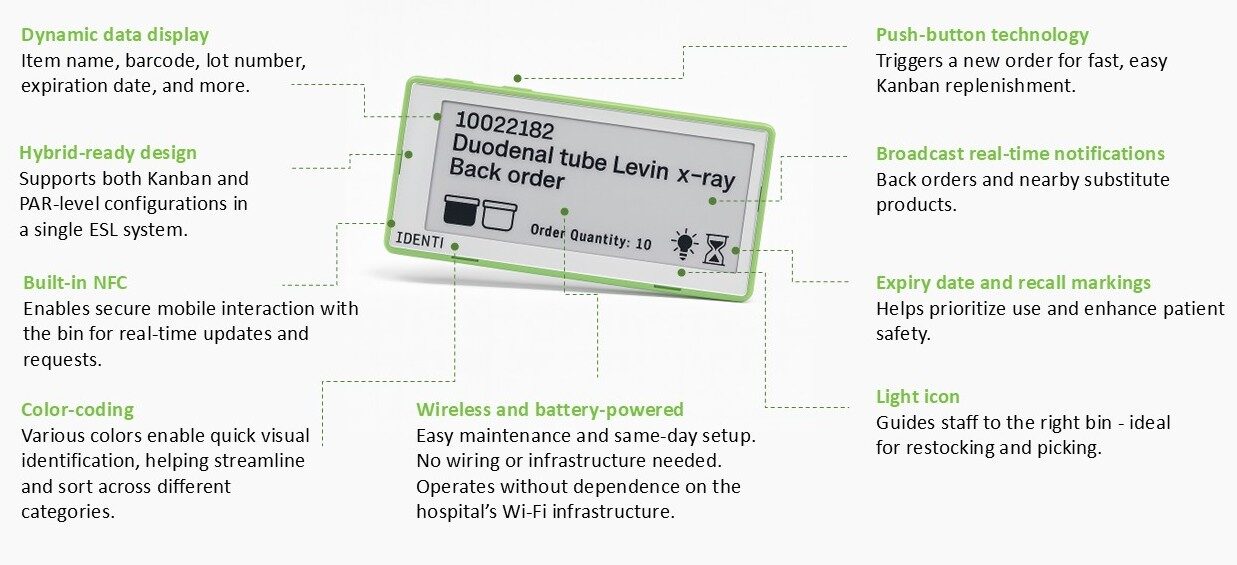
Built with near-field communication (NFC) technology, these smart tags connect directly to IDENTI’s mobile app, providing staff instant access to inventory data with just a tap. The app’s intuitive design and user-friendly interface minimize training requirements and facilitate a seamless transition. And since the system operates on secure cellular connectivity, it doesn’t strain the hospital’s Wi-Fi network, ensuring fast, reliable performance without burdening IT.
How IDENTI’s Hospital Inventory Management System Works
Digital Display Tags connect each supply location to a digital replenishment workflow, allowing staff to initiate restocking requests and providing materials teams with current status information across inventory locations.
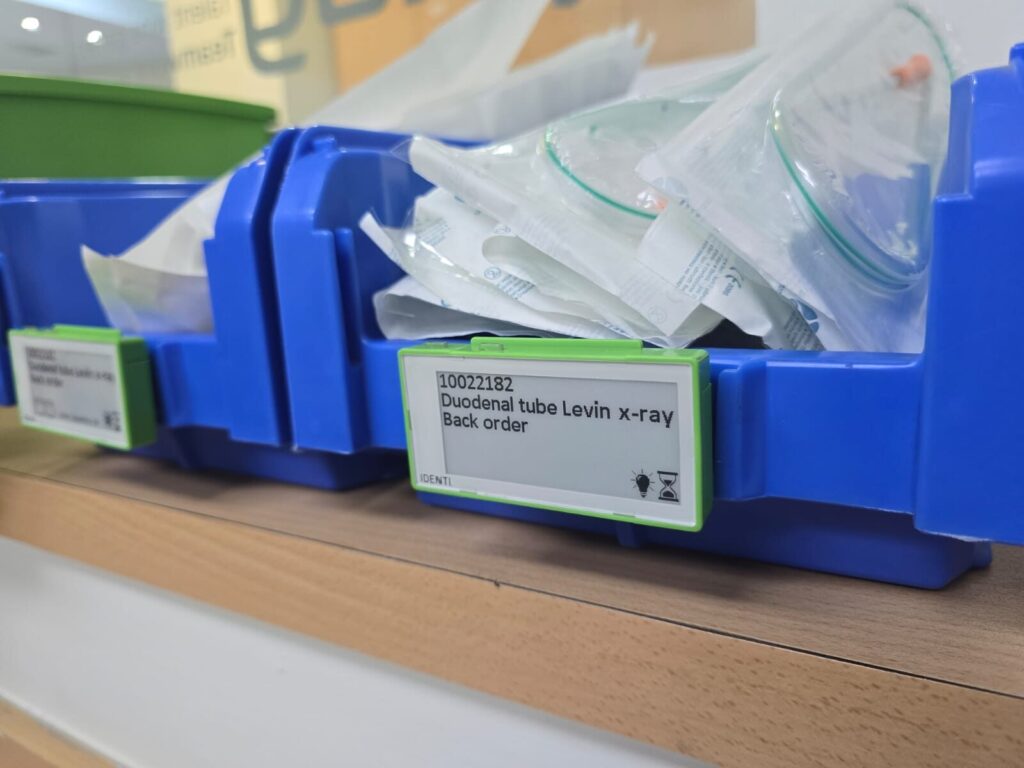
- Connect supplies to a Digital Display Tag: Tags can be attached to bins throughout hospital supply areas and assigned to the appropriate inventory workflow.
- Initiate a replenishment request: Staff use the tag or an NFC-enabled mobile interaction to request replenishment when supplies reach the defined reorder point.
- Transmit the inventory update: The system sends the request through secure cellular connectivity to the IDENTIPlatform without relying on the hospital’s Wi-Fi network.
- Coordinate replenishment: Inventory data can be delivered to the hospital’s internal system or processed into ready-to-use requisition reports.
- Confirm restocking: Once replenishment is completed and confirmed, the item’s status is updated digitally to maintain visibility and traceability.
Kanban and PAR Inventory Management in One System
Each Digital Display Tag can support hybrid Kanban inventory management or PAR replenishment systems, giving hospitals flexibility to manage different types of supplies without added complexity or infrastructure.
The replenishment process depends on the assigned workflow:
For Kanban: When a bin is empty, press a button on the tag to create a replenishment request.
For PAR: Using a mobile app, staff tap their phone and connect to the bin via the app, allowing them to send a request to restock items when the defined reorder level is reached.
Actionable Hospital Inventory Insights with the IDENTIPlatform
Advanced AI and predictive analytics enhance the system’s capabilities. The IDENTIPlatform offers a comprehensive visual dashboard that combines key inventory data, enabling hospitals to transition from reactive to proactive inventory management and automate their hospital supply chain.
Flexible Data Delivery Options
Hospitals can choose how they receive inventory data from the IDENTIPlatform:
- Raw Data Feed: IDENTI transmits raw inventory data directly to the hospital system, where internal software generates requisition requests
- Automated Requisition Reports: IDENTI processes the data and delivers ready-to-use requisition reports
Key Capabilities
- Real-time monitoring across all storage areas
- Continuous replenishment status tracking and notifications for materials managers
- Actionable insights to reduce waste and optimize stock levels
- Smarter, faster decisions that improve operational efficiency and reduce costs
Predictive Inventory Optimization
With PAR workflows, IDENTIPlatform uses past usage data and demand patterns to predict inventory needs and suggest stock adjustments. Its built-in reporting tools show trends, identify inefficiencies, and highlight areas for improvement, making inventory data a valuable asset for hospitals and clinics.
Top Benefits of Hospital Supply Chain Automation
| Key Advantage | Impact |
| End-to-End Automation | From point-of-use to ERP |
| Real-Time Visibility | Track what’s in stock, in transit, or delayed |
| No More Manual Counts | Reduce errors and free up staff time |
| Staff Satisfaction | Enable clinicians to stay focused on care, not supplies |
| Compliance & Audit-Ready | Complete digital record for traceability and expiration monitoring |
| Flexible Setup | Supports both high-volume and high-value item workflows |
Transform Your Hospital’s Supply Chain
Whether you’re tracking sutures or specialty implants, IDENTI’s Digital Display Tags for hospitals are more than just a technology upgrade; they represent a step toward smarter, more resilient healthcare operations. You deserve a hospital inventory management system that automates your supply chain, shifting the focus from counting to patient care.
Ready to modernize your supply chain?
Request a demo and discover how IDENTI’s Digital Display Tags can help automate hospital inventory management, improve supply visibility, and support smarter replenishment workflows.